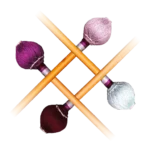
The 90° arrangement of vibraphone and marimba is not a visual effect, but a structural decision.
It transforms two separate instruments into a single performative system.
By standing within this angular setup, the performer no longer shifts between instruments but moves inside an expanded sound field. Harmonic structures, melodic lines, resonance, and rhythm emerge from one continuous physical position. The body becomes the connecting axis between registers and timbres.
This configuration is rooted in improvisational thinking. It allows fluid transitions, overlapping functions, and polyphonic textures without interrupting the musical flow. Rather than treating vibraphone and marimba as independent entities, they are understood as one extended instrument — shaped by movement, balance, and spatial awareness.
The three works explore different relational models between vibraphone and marimba within the fixed 90° setup. Each piece approaches the configuration from a distinct perspective, redefining how the two instruments interact in terms of function, register, and physical coordination.
Rather than assigning stable roles, the pieces treat the setup as a flexible system. In some contexts, the instruments operate in clearly separated layers — sustain and attack, resonance and grounding. In others, their functions overlap and dissolve into a shared polyphonic surface. What changes from piece to piece is not the physical arrangement, but the conceptual framing of the relationship.
The pieces are not conceived as demonstrations of virtuosity, but as compositional inquiries into balance, resonance, and coordination. They investigate how two instruments can function either as contrasting entities or as a single extended body — depending on context, material, and structural intention.
Sheet music for this collection is published by Vienna Percussion Editions.
In Rain Chain, the instrumental roles are initially clearly defined.
The left hand establishes a rhythmic pattern on the marimba, while the right hand plays on the vibraphone. The inner mallet of the right hand reinforces the groove together with the marimba, built around an open fifth. The parallel use of the pitch A on both instruments creates a subtle floating quality within this harmonic frame.
Above this foundation, long sustained tones on the vibraphone form the main theme, contrasting the rhythmic drive below. Gradually, isolated “droplet” figures emerge, evoking the image of a rain chain.
A contrasting B section introduces harmonic changes and more pronounced melodic movement, increasing the coordinative demands. After an improvisational passage over the opening pattern, the material returns and the piece fades out gently through the recurring droplet motif.
Children’s Song approaches the setup from a more unified perspective.
Here, the marimba functions as a natural extension of the vibraphone’s lower register. The vibraphone is conceptually continued downward by one and a half octaves, but gains the warm and grounded timbre of the marimba.
Rather than contrasting the instruments, the piece treats them as one expanded sound body. The writing is transparent and lyrical, focusing on melodic clarity supported by a soft, integrated bass layer. The 90° configuration allows seamless movement between registers without interrupting the musical flow.
D ’ N ’ A is the most complex of the three works in terms of structural layering and role distribution.
The title operates on three distinct levels.
First, it is a literal wordplay on the pitches D and A, which form the sustained fifth at the opening of the piece.
Second, this fifth generates a structural image: D and A function like the two strands of a double helix, while the developing material between them unfolds like the connecting bases. The theme initially remains confined within this intervallic frame before gradually expanding beyond it.
Third, the title refers to the artistic “DNA” of the Duo Waltersdorfer, for whom the work was originally conceived.
What begins within the restricted space of the fifth develops into an increasingly layered texture. The instruments exchange and overlap functions: melody, inner voice, bass, harmonic support, and rhythmic propulsion shift continuously between vibraphone and marimba.
An improvisational section intensifies this interplay, demanding that the performer maintain structural coherence while navigating dense coordinative challenges. A brief reminiscence of the opening material closes the arc, returning to the intervallic nucleus from which the piece emerged.
Duo Waltersdorfer explores the expanded mallet setup from a dialogical perspective. What is realised by one performer in the solo works becomes here a shared physical and musical space. Roles are negotiated in real time: melody, resonance, rhythm and harmonic grounding circulate between two bodies rather than within one.
The duo setting intensifies aspects already present in the solo concept — coordination, spatial awareness, and structural listening — while introducing a second artistic identity into the system. The result is not a doubling of material, but a reconfiguration of it: two performers shaping a common sound architecture.